
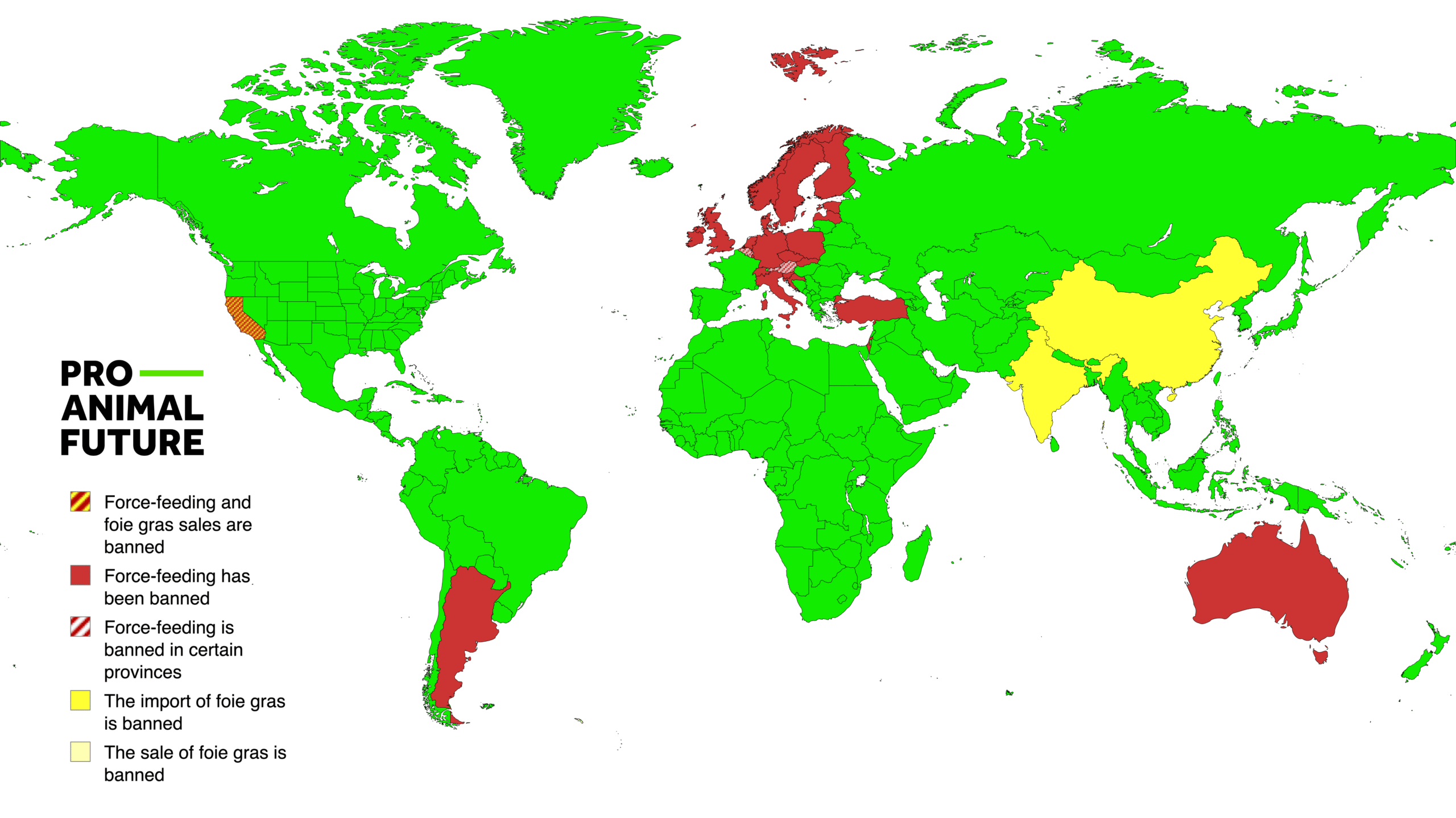
Policies restricting foie gras (the fattened liver of a duck or goose that has been force-fed) vary significantly depending on the region.
Some municipalities have banned force-feeding of birds within their borders, others restrict the sale of foie gras, while a few countries impose regulations on imports, choosing not to participate in supply chains tied to force-feeding.
To the best of our knowledge, as of April 2026, 20 countries have fully prohibited force-fed foie gras production (force-feeding): UK, Norway, Germany, Austria, Denmark, Finland, Poland, Czech Republic, Luxembourg, Italy, Sweden, Netherlands, Ireland, Croatia, Malta, India, Israel, Australia, Turkey, and Argentina.
Where is foie gras RESTRICTED in the Global South?
Instead of regulating local farms, some countries in Asia, South America, and the Middle East have acted through import rules, court decisions, and national standards that send clear signals about what kinds of products they are willing to accept within their borders.
1. India
India took one of the strongest positions in 2014, when the government imposed a nationwide ban on foie gras imports. The decision followed a review of animal welfare concerns related to force-feeding and made India the first country to formally close its borders to the product. Although foie gras was never common in Indian cuisine, the ban still carried international weight as it showed that countries without domestic production can still take ethical positions through trade policy.
2. Israel
In 2003, the country’s Supreme Court ruled that force-feeding violated national animal welfare laws, requiring producers to shut down foie gras operations entirely. At the time, Israel was one of the world’s largest foie gras producers, and the ruling really started the global conversation about whether force-feeding could coexist with modern welfare standards.
3. Australia
In Australia, force-feeding for foie gras production is prohibited, but imports remain legal. In practice, many local councils, institutions, and hospitality groups have chosen not to serve foie gras, even in the absence of a national sales ban. These voluntary decisions show how purchasing choices have the ability to reinforce legal standards.
4. Turkey
Turkey banned force-feeding in 2004 through Animal Protection Law No. 1/323.
5. Argentina
In 2003, Argentina banned foie gras production, prohibiting it on animal welfare grounds.
6. China
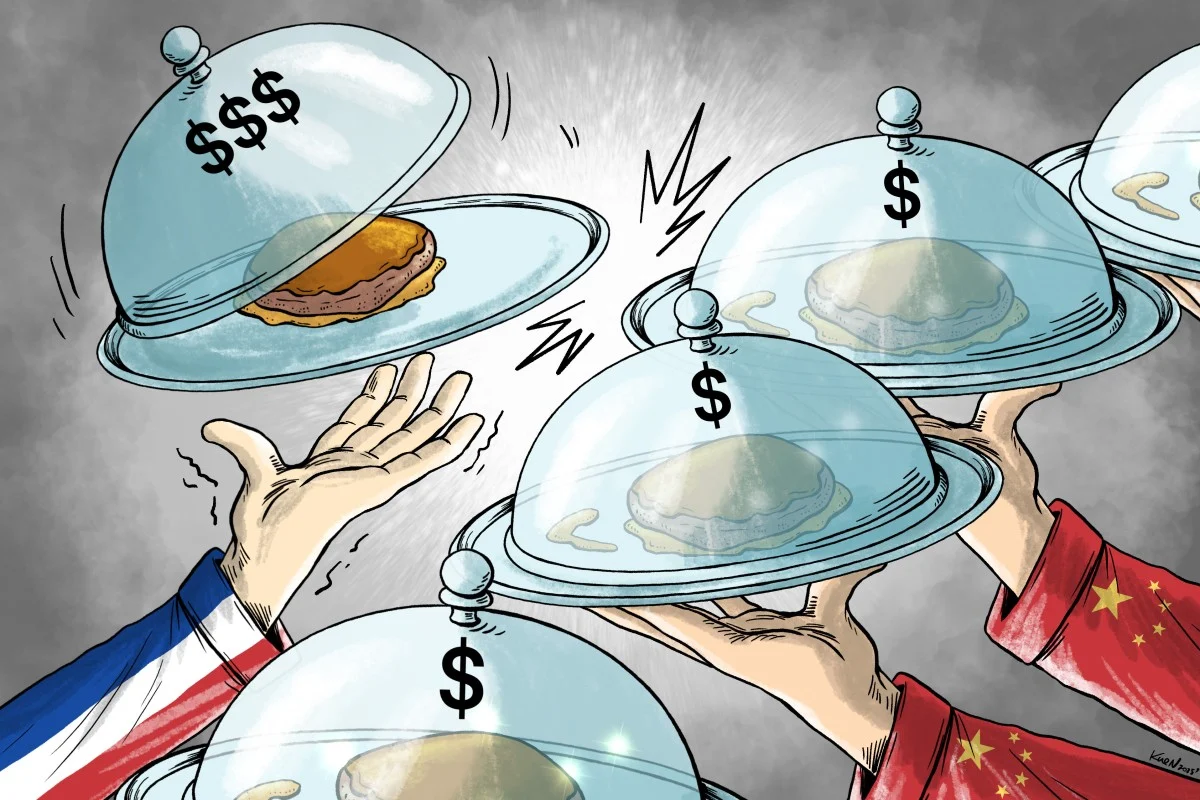
According to Bloomberg, 30% of global foie gras is now produced in China, and demand for foie gras in China is growing. In 2024, Linqu county in China’s Shandong province slaughtered 5 million Landes geese to produce 5,000 tonnes of foie gras. China prohibits foie gras imports, meaning nearly all foie gras consumed comes from factory farms in China.
Where is Foie Gras Production Legal In the Global South?
Unfortunately, force-feeding ducks and geese for foie gras remains legal across Africa, Asia, and most of South America. Production costs are significantly lower in these regions due to cheaper labor, creating economic incentives for expansion. Meanwhile, rising affluence in developing nations like China is generating new demand for luxury products among growing middle-class populations. Together, these factors make it crucial to reduce demand for foie gras and advance protective legislation in the Global South before the industry can establish deeper roots.
Where Is FORCE-FEEDING Banned in Europe?
Europe sits at the center of the global foie gras debate. The majority of European nations prohibit force-feeding under animal welfare law. However, even in countries where production is banned, imports remain legal due to EU trade rules.
1. United Kingdom
The United Kingdom banned foie gras production in 2006, but imports continue. Roughly 180 tonnes of foie gras enter the UK each year, largely from France and Hungary, leading to fresh debate about whether imports should follow the same welfare standards.
2. Switzerland
Last year, Switzerland adopted a regulation requiring foie gras sellers to disclose that the production process causes pain. The rule took effect July 1st with a two-year transition period. Although foie gras production was already banned in Switzerland, this new labeling requirement shifts attention to the point of sale, creating an opportunity to see how consumers respond when production realities are spelled out clearly.
3. Norway
Norway was a pioneer, banning force-feeding in 1974 through its Animal Welfare Act. The law established that animals must be treated with consideration for their natural needs, and force-feeding violated these principles. Norway’s ban has remained in effect for over 50 years, though imports remain legal.
4. Germany
Germany banned force-feeding in July 1972, making it one of the earliest countries to prohibit the practice. The ban stems from animal protection laws that prohibit causing animals unnecessary pain or suffering. Germany has maintained this prohibition for over 50 years while still permitting foie gras imports.
5. Austria
Most Austrian provinces prohibit foie gras production through explicit laws against force-feeding for non-medical purposes. The practice conflicts with Austria’s Federal Animal Protection Act, which requires animals be kept according to species-specific needs. Austria has also banned cages for rabbits and is phasing out farrowing crates for sows.
6. Denmark
Denmark bans force-feeding through specific animal protection legislation that prohibits feeding animals in ways that cause unnecessary suffering. The ban has been in place for years, though Denmark allows foie gras imports.
7. Finland
Finland prohibits force-feeding under its animal welfare laws, which set strict standards for farm animal treatment. The Finnish approach emphasizes that production methods must not cause unnecessary suffering, making foie gras production incompatible with national law.
8. Poland
Poland explicitly prohibits force-feeding for non-medical purposes through its animal protection legislation. The country’s ban reflects broader animal welfare standards that prevent cruel production methods, though foie gras can still be imported and sold.
9. Czech Republic
The Czech Republic has explicit laws prohibiting force-feeding for non-medical purposes. The ban is part of the country’s comprehensive animal protection framework that makes foie gras production illegal while imports remain permitted.
10. Luxembourg
Luxembourg explicitly prohibits force-feeding through its animal welfare legislation. As a small country with strong animal protection standards, Luxembourg’s ban has been maintained for years, though it still allows foie gras imports.
11. Italy
Italy bans force-feeding through specific laws that prohibit the practice for non-medical purposes. The ban aligns with Italy’s broader animal welfare framework emphasizing humane treatment of farm animals. Despite the production ban, foie gras remains available through imports, primarily from France.
12. Sweden
Sweden has banned force-feeding for foie gras production, joining the majority of European countries in prohibiting this practice on animal welfare grounds.
13. Netherlands
The Netherlands prohibits force-feeding through interpretation of its general animal protection laws. Production has been banned in the country, though foie gras imports remain legal.
14. Ireland
Ireland bans force-feeding through interpretation of its general animal protection laws, making foie gras production illegal in the country while still permitting imports.
15. Croatia
Croatia has explicit laws prohibiting force-feeding for non-medical purposes, banning foie gras production while allowing imports to continue.
16. Malta
Malta banned both fur farming and foie gras production in 2022 through a legal notice prohibiting the forced feeding of birds. While there were no active foie gras producers in Malta at the time, the ban prevents future production from starting.
17. Estonia
Estonia is among the European countries that have banned foie gras production, though specific details about the ban’s implementation are limited in available documentation.
18. Latvia
Latvia has banned force-feeding for foie gras production, joining other Baltic states in prohibiting this practice.
19. Slovakia
Slovakia is among the European countries that prohibit foie gras production, though imports remain legal.
20. Slovenia
Slovenia has banned foie gras production as part of broader animal welfare protections, though the country continues to allow imports.
Where is Foie Gras Production Legal In Europe?
Only a handful of European countries continue to allow force-feeding for foie gras production. France is by far the largest producer in Europe, followed by Hungary, Bulgaria, and Spain. In Belgium, force-feeding remains legal only in the Wallonia region, after bans were implemented in Brussels (2017) and Flanders (2023). Additionally, Greece, Portugal, Romania, Cyprus, Lithuania, Ukraine, Belarus, Iceland, North Macedonia, and Serbia have no confirmed bans on the practice, though most of these countries have no known foie gras production industry.
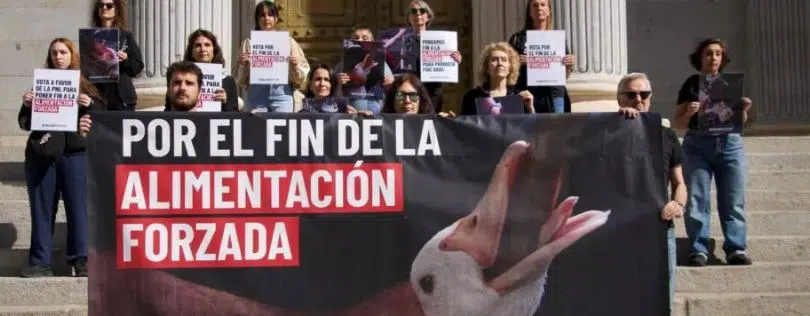
In September 2025, activists from Igualdad Animal demonstrated outside Spain’s Congress of Deputies in Madrid, calling for an end to force-feeding. The protest followed investigations that drew national attention and helped push the issue further into parliamentary discussion.
Where Is Foie Gras Banned in North America?
In North America, foie gras policy has advanced primarily through state and city action. Without national legislation in place, local governments have become the main arena where residents decide whether force-fed products belong in their communities.
1. California (USA)
Senate Bill 1520, passed in 2004 and implemented in 2012, prohibits both force-feeding birds and selling foie gras produced through that practice. The ban moved through the legislature after undercover investigations and expert testimony brought force-feeding into public view. Despite years of legal challenges from producers, courts have upheld the ban, reshaping restaurant and retail practices across the state.
2. Brookline, Massachusetts (USA)
In May 2025, Brookline, Massachusetts approved a bylaw amendment banning the sale of foie gras. Four establishments sold or served foie gras before the vote.
3. Pittsburgh, Pennsylvania (USA)
Pittsburgh, which adopted a foie gras sales ban in 2023, is a good example of what comes next after a law passes. Natalie Ahwesh, Executive Director of Humane Action Pennsylvania, told Sentient Media that the city has investigated restaurants suspected of noncompliance, and enforcement remains an ongoing focus. Ahwesh has also said that organizers are preparing to bring similar efforts to Philadelphia, using lessons learned from Pittsburgh.
Where is Foie Gras Production Legal In North America?
The vast majority of Americans can still buy foie gras, as 49 states allow its sale. New York City passed a ban in 2019, but the New York State Supreme Court overturned it before it took effect, ruling the city lacked authority to regulate foie gras under state agricultural law. Chicago passed a ban in 2006 but repealed it two years later after industry pressure.
In Canada, foie gras production is still legal at the federal level, with most operations in Quebec. A few weeks ago, the Canadian Coalition for Farm Animals launched a new parliamentary e-petition calling for a federal ban on force-feeding, imports, and sales. While it doesn’t change the law on its own, the petition has reopened public discussion and placed the issue before federal lawmakers.
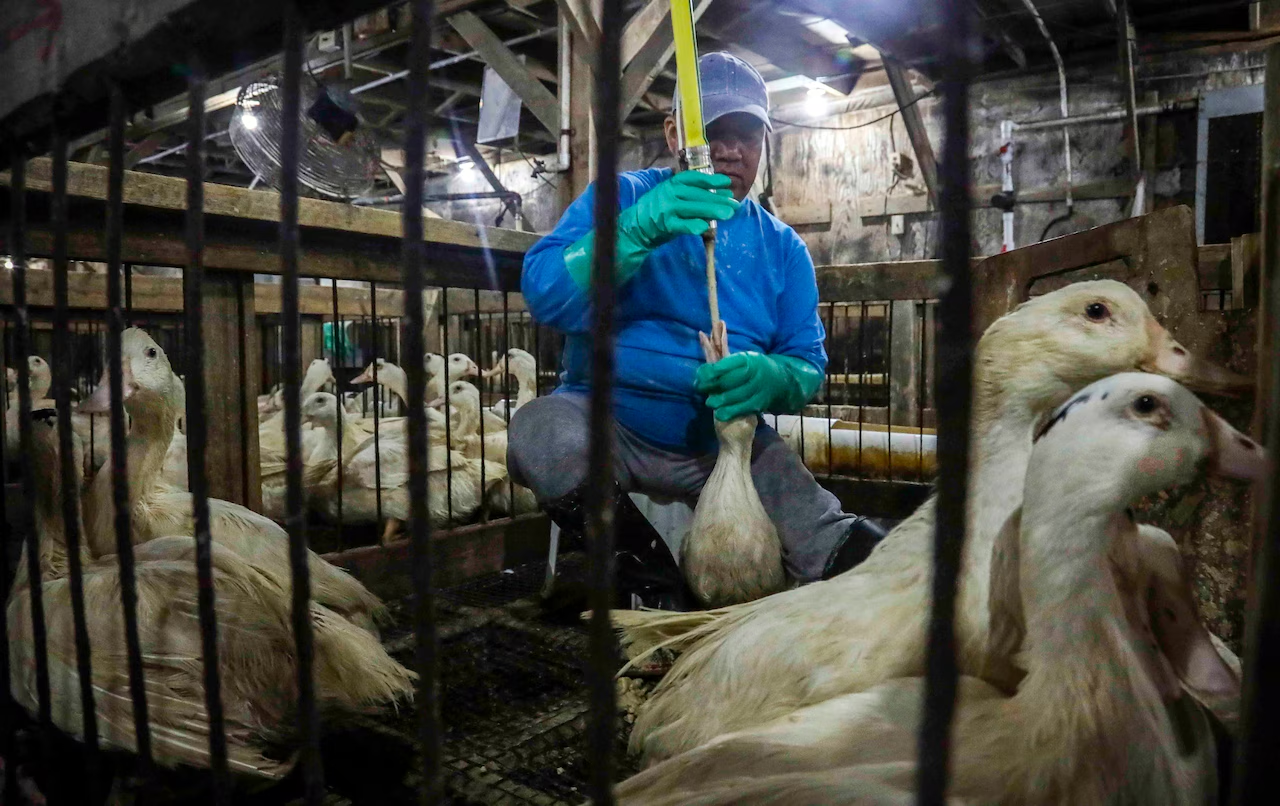
Here’s 3 ways you can take action today to help continue the fight to end foie gras, for good:
- Sign Pro-Animal Future’s online petition to ask elected officials in 3 major U.S. cities to end the sale of foie gras.
- Sign up to volunteer to support our 2026 anti-foie-gras campaigns (in person, or remotely).
- Donate to help pass our concurrent ballot initiatives to ban foie gras in Washington D.C. and Denver.
Pro-Animal Future is a grassroots political movement working to evolve beyond factory farming through local political action.